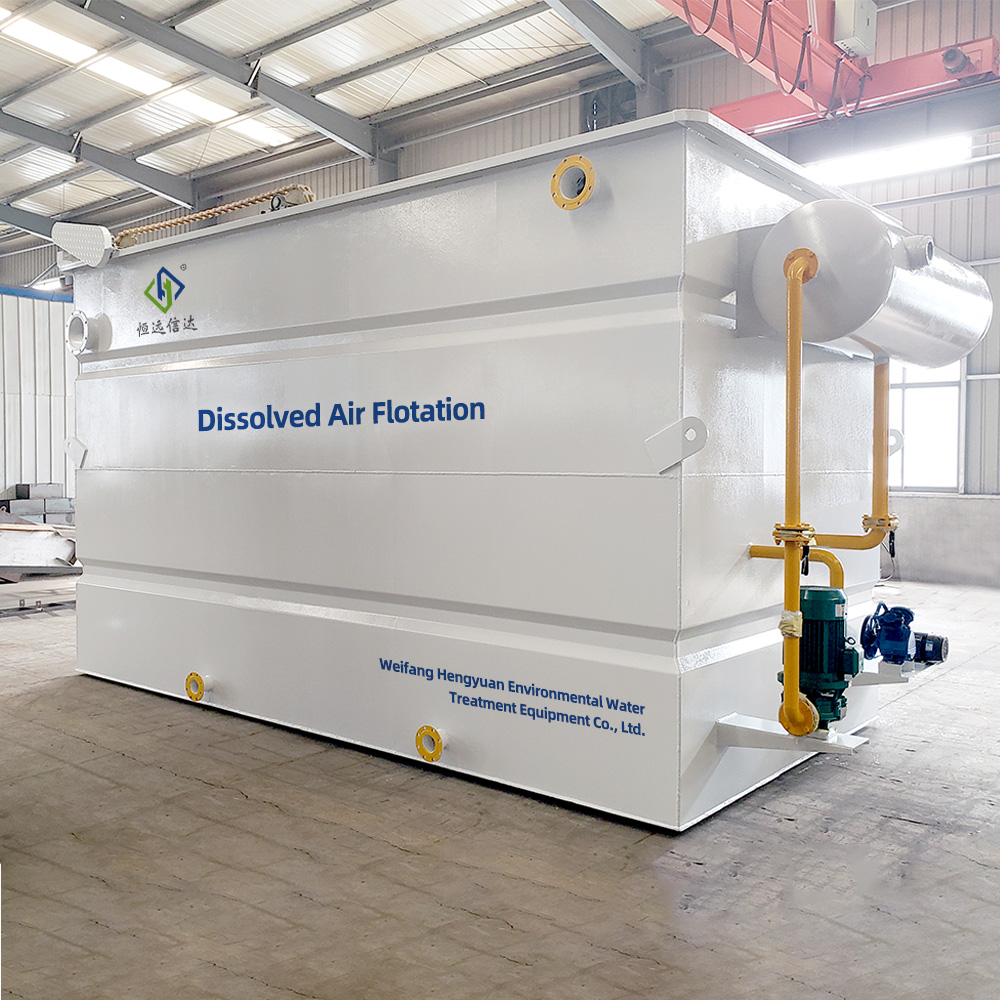
Industrial facilities face severe operational hurdles when managing fats, oils, and grease (FOG) in their effluent. Traditional gravity separators, like API units, routinely fail when processing emulsified oils. We see this constantly across petrochemical plants, food processing facilities, and metalworking shops. Mechanical agitation, heat, and chemical surfactants break oils into microscopic droplets that remain suspended indefinitely. When these tight emulsions bypass primary separation, they foul downstream biological systems and degrade critical equipment. You end up with blocked membrane bioreactors, dead aeration basins, and massive municipal surcharges for non-compliant discharge. Dissolved Air Flotation (DAF) serves as the necessary intermediary step. It bridges the gap between primary screening and secondary biological treatment. By injecting microscopic air bubbles into the wastewater, DAF actively forces suspended solids, heavy metals, and complex oils to the surface. This provides an engineered, predictable method for separating contaminants that gravity alone simply cannot handle.
Mechanism of Action: DAF systems inject millions of microscopic air bubbles (10–50 microns) into the wastewater to decrease the specific gravity of suspended particles, achieving up to 99% removal of free and emulsified oils when paired with optimal chemistry.
System Integration: Successful deployment requires evaluating the entire Wastewater Treatment System, specifically hydraulic loading rates, footprint constraints, and downstream sludge management capabilities.
Risk Mitigation: Bench-scale treatability studies and pilot testing are non-negotiable prerequisites to determine precise coagulant/flocculant dosing and prevent costly full-scale implementation failures.
The Role of DAF in an Industrial Treatment Train
Limitations of Gravity Separation
Gravity-based oil-water separators rely entirely on density differentials. Stokes' Law dictates how particles settle or float based on their specific gravity relative to water. This physical principle works fine for large, free-floating oil slicks that naturally rise to the surface. However, industrial wastewater rarely presents such simple conditions. High-pressure transfer pumps, elevated process temperatures, and the presence of chemical surfactants shear oils into tight emulsions. These microscopic droplets lack the necessary buoyancy to overcome the drag forces in the water column. They stay suspended indefinitely. Furthermore, variable flow rates create turbulence inside the separator tanks. This turbulence disrupts the quiescent zones required for gravity separation, pushing oils past the baffles and out the discharge weir. You need an active separation mechanism to break this cycle and force the oils out of suspension.
The Microbubble Mechanism
Dissolved air flotation actively alters the specific gravity of your target contaminants. The process starts by taking a portion of the clarified effluent and pressurizing it using a recycle pump, typically operating between 60 and 90 psi. We inject compressed air into this pressurized recycle stream. According to Henry's Law, gas solubility increases with pressure, allowing the water to become supersaturated with dissolved air. This recycle stream then flows through a specialized pressure release valve directly into the main flotation tank. As the pressure drops instantly to atmospheric levels, the dissolved air precipitates out of solution. This reaction generates millions of microbubbles, usually ranging from 10 to 50 microns in diameter. These bubbles collide with and attach to FOG, Total Suspended Solids (TSS), and particulate matter through mechanisms of interception and adhesion. The combined bubble-particle agglomerate becomes highly buoyant, rising rapidly to the surface to form a thick, stable sludge blanket.
Industry-Specific Applications
Different manufacturing sectors generate vastly different effluent profiles, requiring adaptable separation strategies. A dairy or meat processing plant produces wastewater loaded with heavy organic FOG, proteins, and massive Biochemical Oxygen Demand (BOD). These animal fats require rapid separation to prevent putrefaction, bacterial growth, and severe odor issues. On the other hand, oil refineries and heavy manufacturing plants handle complex hydrocarbon emulsions. Metalworking fluids contain synthetic coolants, rust inhibitors, and tramp oils that stubbornly resist natural separation. DAF technology adapts to these extreme variations through targeted chemical conditioning. By adjusting the upstream chemistry, a single DAF design can handle the heavy organic loads of a food plant just as effectively as the petroleum hydrocarbons of a chemical refinery.
Positioning in the Treatment Train
DAF units rarely operate as standalone solutions. They sit strategically within a comprehensive Wastewater Treatment System to maximize overall plant efficiency. Raw effluent first passes through mechanical screens to remove large debris like rags, plastics, or large food particles that could clog pumps. Flow equalization tanks then normalize hydraulic surges and blend the wastewater. The DAF unit follows immediately after equalization, acting as the primary clarifier. By stripping out the vast majority of FOG and TSS upfront, the DAF protects sensitive downstream biological processes. Aeration basins and membrane bioreactors receive a highly clarified influent, preventing organic overloading and physical fouling of the biological floc.
Establishing Success Criteria for Flotation Systems
Regulatory Compliance and Discharge Limits
Success starts with meeting your specific municipal or environmental discharge permits. High concentrations of FOG trigger immediate municipal surcharges and can solidify in municipal sewer lines, causing catastrophic blockages. DAF systems target FOG directly, which simultaneously drives down BOD and Chemical Oxygen Demand (COD) because oils exert a massive oxygen demand. Many industrial facilities aim for FOG levels below 100 mg/L and TSS below 250 mg/L to stay well within compliance margins. Consistent compliance prevents regulatory fines, eliminates the risk of forced operational shutdowns, and maintains a positive relationship with local municipal treatment authorities.
Co-Removal of Metals and Particulate Matter
Industrial wastewater often contains a complex mix of contaminants. Heavy metals, such as zinc, copper, or chrome, frequently bind to emulsified oils and fine particulates. An optimized oily wastewater treatment DAF removes these contaminants simultaneously. This requires precise upstream pH adjustment to alter the solubility of the dissolved metals, forcing them to precipitate into solid hydroxide particles. Coagulants then neutralize the electrical charges of these particles, and flocculants bind them together with the oil droplets. The microbubbles float this entire complex matrix to the surface. This co-removal strategy simplifies the overall treatment architecture, eliminating the need for separate metal precipitation clarifiers.
Downstream Process Protection
Removing oils before they reach biological stages yields massive operational benefits. Emulsified oils coat the biological floc in aeration basins, severely inhibiting oxygen transfer. When this happens, the alpha factor drops significantly. Your blowers have to work much harder to maintain dissolved oxygen levels, consuming excess electricity and wearing out equipment prematurely. Furthermore, oils cause severe fouling in membrane bioreactors (MBRs). FOG blinds the microscopic pores of ultrafiltration membranes, causing transmembrane pressure to spike rapidly. You end up running frequent, aggressive chemical cleaning cycles that destroy membrane lifespans. A properly sized DAF unit acts as a protective barrier, ensuring your biological systems operate at peak efficiency.
Resource Recovery Potential
Modern wastewater management treats effluent as a resource rather than just a waste stream. DAF sludge contains high concentrations of recoverable materials. In food processing, recovered animal fats often hold commercial value for rendering or can be routed to on-site anaerobic digesters to boost biogas production. In machining and metalworking, specialized skimming allows for the reclamation of base oils. Success criteria should evaluate the feasibility of this reclamation. Minimizing the water content in the floated sludge reduces disposal volumes. Drier sludge translates directly to fewer hauling trucks leaving your facility, streamlining your waste management logistics.
Core Design Criteria and Evaluation Dimensions
Hydraulic and Solids Loading Capacities
System sizing dictates performance. You must evaluate hydraulic loading based on peak flow rates, not just average daily flows. Surface overflow rate (SOR) is a critical metric, typically designed between 2 to 4 gallons per minute per square foot for industrial applications. High SORs push particles out of the tank before they have time to float to the surface. Influent solids concentration also drives the design. Heavy solids mass loading requires larger flotation areas, deeper tanks, and more robust skimming mechanisms. Facilities must conduct comprehensive flow monitoring to capture data during heavy washdown shifts. Designing for maximum anticipated surges prevents hydraulic washout and ensures consistent effluent quality.
Dissolved Air System Design
The microbubble generation system serves as the heart of the DAF. Traditional designs utilize a compressed air system, a large saturation vessel, and a standard centrifugal recirculation pump. This setup requires careful calibration of air flow meters and pressure valves to prevent large, turbulent bubbles. Large bubbles agitate the sludge blanket, causing previously floated solids to sink back into the water column. Modern designs often employ multiphase pumps. These specialized pumps draw in atmospheric air and water simultaneously, shearing the air into the water within the pump casing itself. Multiphase systems eliminate the need for separate air compressors and large saturation vessels, offering greater engineering reliability and highly consistent microbubble generation.
Chemical Conditioning Requirements
Chemical additives dictate the success of emulsion breaking. Chemical-free operation only works for simple free oils and easily floated particulates. Complex industrial emulsions require a strict, multi-step chemical approach.
Coagulation: Additives like aluminum sulfate (alum), polyaluminum chloride (PAC), or ferric chloride neutralize the negative charges on suspended particles. This charge neutralization breaks the emulsion.
pH Adjustment: Caustic soda or sulfuric acid optimizes the environment for the specific coagulant used, ensuring maximum precipitation.
Flocculation: Long-chain polymer flocculants gather the neutralized particles into large, visible flocs. These flocs provide a massive surface area for microbubble attachment.
Precise dosing is mandatory. Operators must rely on empirical jar testing to determine the exact chemical recipe, as overdosing or underdosing will cause immediate separation failure.
Skimmer and Sludge Removal Mechanisms
The floated sludge must be removed continuously without disturbing the clarified water below. Chain-and-flight skimmers represent the industry standard for large rectangular tanks. They utilize full-width scraper blades pulled by non-metallic or stainless steel chains. They handle heavy, viscous oily sludge effectively, pulling it up a beach plate and into a sludge hopper. Auger-based systems offer an alternative for specific tank geometries, rotating at the surface to pull sludge toward a discharge point. The choice depends entirely on sludge consistency. Highly viscous FOG requires the brute force of a chain-and-flight system. Proper skimmer speed adjustment prevents the sludge from drying out and sinking back into the water column.
Conceptual Trade-Offs and System Optimization
Footprint vs. Clarification Efficiency
Facility space is often severely limited, especially in existing plants looking to upgrade their wastewater infrastructure. Engineers must balance the physical footprint of the DAF against the required clarification efficiency. Standard open-tank DAF units provide long hydraulic retention times, typically 20 to 30 minutes. They handle massive variations in solids loading and are highly forgiving of chemical dosing errors, but they require significant floor space. High-rate DAF systems utilize lamella plates or inclined tubes within the flotation zone. These inclined plates drastically increase the effective settling and flotation area, allowing for a much smaller physical footprint. However, high-rate systems demand stricter maintenance. The lamella plates can foul quickly if the chemical conditioning fails or if sticky FOG accumulates between the plate spacing.
Comparison of DAF System Configurations
Feature
Standard Open-Tank DAF
High-Rate Lamella DAF
Physical Footprint
Large area required
Compact (up to 50% smaller)
Hydraulic Retention Time
20 - 30 minutes
5 - 15 minutes
Tolerance to Shock Loads
High tolerance
Moderate tolerance
Maintenance Complexity
Low (open access for cleaning)
Higher (plate cleaning required)
Ideal Application
Heavy, variable FOG loads
Space-constrained facilities
Automation vs. Manual Oversight
Operating a DAF requires continuous adjustment to match changing influent conditions. Facilities must decide between manual oversight and automated control systems. Manual operation relies on operators taking grab samples, manually adjusting chemical feed pumps, and visually inspecting the sludge blanket thickness. This approach risks inconsistent performance during off-shifts or when experienced operators are unavailable. Automated systems integrate inline sensors for pH, turbidity, and flow rate. Supervisory Control and Data Acquisition (SCADA) systems adjust chemical dosing in real-time based on influent variations. Automated sludge level sensors trigger skimmer operation only when the blanket reaches an optimal thickness. Automation ensures consistent effluent quality, prevents chemical waste, and reduces the daily labor burden on the plant staff.
Implementation Risks and Mitigation Strategies
Managing Variable Influent Quality
Industrial production rarely produces a steady stream of identical wastewater. Washdown cycles, product changeovers, and shift changes introduce massive spikes in flow rate, temperature, and chemical surfactants. These hydraulic and organic shock loads easily overwhelm a DAF unit, pushing solids out the effluent weir before they can float. The primary mitigation strategy involves upstream flow equalization. An equalization tank acts as a buffer. It collects variable flows over a 24-hour period and blends them into a homogenous mixture. Forward feed pumps then send this blended wastewater to the DAF at a constant, manageable rate. Without equalization, a DAF system operates reactively, leading to frequent effluent compliance violations.
Chemical Dosing Failures
Incorrect chemical dosing causes immediate system failure. Under-dosing leaves emulsions intact. The wastewater remains cloudy, and oils pass straight through the DAF and into the municipal sewer. Over-dosing creates equally severe problems. Excess coagulant generates massive volumes of chemical sludge, wasting expensive reagents and potentially increasing the toxicity of the effluent. Over-dosed polymer causes sticky, unmanageable sludge that fouls skimmers, blinds sensors, and clogs sludge pumps. Mitigation requires continuous monitoring. Automated zeta potential analyzers or inline turbidity meters provide real-time feedback to the dosing pumps. Operators must perform daily jar tests to verify the automated system's accuracy and adjust the baseline setpoints.
Maintenance Complexities
DAF systems operate in harsh, corrosive environments. Abrasive solids wear down recirculation pump impellers and mechanical seals. Sticky FOG coats instrumentation sensors, causing false readings. The most critical maintenance task involves the pressure release valves or nozzles. If these nozzles clog with debris or polymer buildup, microbubble generation stops entirely. The system instantly reverts to a poorly functioning gravity separator. Routine maintenance schedules must include weekly nozzle inspection and cleaning. Skimmer chains require regular tensioning and alignment to prevent binding or snapping. Facilities must stock critical spare parts, including multiphase pump seals, drive sprockets, and replacement nozzles, to minimize downtime during unexpected failures.
The Necessity of Treatability Testing
Skipping empirical testing guarantees implementation failure. No two industrial effluents are identical. Theoretical calculations cannot account for the complex interactions of proprietary manufacturing chemicals, cleaning agents, and varying temperatures. Bench-scale treatability testing, or jar testing, is the first mandatory step. It identifies the exact coagulants and flocculants required and determines the optimal pH range for charge neutralization. Following jar testing, facilities should deploy a pilot DAF unit on-site. Pilot testing runs a slipstream of live wastewater through a scaled-down DAF for several weeks. This validates the design criteria, proves the chemical recipe under real-world variations, and provides accurate sludge generation data for downstream handling equipment.
Conclusion
Initiate a comprehensive wastewater characterization audit to identify peak flow rates, temperature variations, and maximum FOG concentrations during heavy production shifts.
Schedule bench-scale treatability tests with water treatment chemists to determine the exact coagulation and flocculation recipe required to break your specific emulsions.
Evaluate your facility's footprint constraints to decide whether a standard open-tank or a high-rate lamella DAF configuration best fits your spatial and maintenance capabilities.
Install upstream flow equalization tanks to buffer hydraulic surges and protect the DAF unit from organic shock loading during plant washdown cycles.
FAQ
Q: What is the typical removal efficiency of a DAF system for oily wastewater?
A: When properly sized and chemically optimized, a DAF system routinely achieves 90% to 99% removal of free and emulsified oils. Total Suspended Solids (TSS) removal typically ranges from 85% to 95%. Performance depends heavily on maintaining steady hydraulic loading and precise chemical dosing.
Q: What is the performance difference of DAF with and without chemical treatment?
A: Without chemicals, DAF only removes large, free-floating oils and easily floated solids. It cannot break emulsions. Adding coagulants and flocculants neutralizes particle charges and binds microscopic droplets together. This chemical conditioning is mandatory for removing emulsified oils and achieving high-efficiency clarification.
Q: Can a DAF system remove heavy metals and other particulate matter alongside oil?
A: Yes. By adjusting the wastewater pH and adding specific coagulants, heavy metals precipitate into solid particles. Flocculants then bind these metal particles together with the oil droplets and suspended solids. The microbubbles float this combined matrix to the surface for simultaneous removal.
Q: How does a DAF unit integrate into an existing treatment train?
A: A DAF unit typically sits between primary screening and secondary biological treatment. Raw wastewater passes through screens and an equalization tank first. The DAF then removes FOG and TSS. This highly clarified effluent flows into biological systems, protecting them from organic overloading and physical fouling.
Q: What is the difference between standard and high-rate dissolved air flotation?
A: Standard DAF uses large, open tanks with longer retention times, making it highly tolerant to heavy solids loading. High-rate DAF incorporates inclined lamella plates to increase the effective surface area. This allows for a much smaller physical footprint but requires stricter maintenance to prevent plate fouling.
Q: How much maintenance does the microbubble generation system require?
A: Maintenance depends on the design. Traditional compressor-based systems require frequent calibration of air saturation vessels. Modern multiphase pumps require less daily adjustment but need routine seal inspections. All systems require regular cleaning of the pressure release nozzles to prevent clogging and ensure consistent microbubble formation.
It is a production-oriented high-tech enterprise integrating R&D, production and sales of water treatment equipment, disinfection equipment and ecological toilets. It has won the honorary titles of National.
 English
 العربية
 Français
 Русский
 Español
 Português
 Deutsch
 italiano
 日本語
日本語 한국어
한국어 Nederlands
 Tiếng Việt
 ไทย
ไทย Türkçe
 አማርኛ
አማርኛ ພາສາລາວ
 Bahasa Melayu
 Filipino
 Bahasa Indonesia
 magyar
 Română
 Монгол
 қазақ
қазақ Српски
 हिन्दी
 فارسی
فارسی Kiswahili
 Slovenščina
 Svenska
 Ελληνικά
 Suomi
Suomi Dansk
Dansk Shqip
Shqip বাংলা
বাংলা Oʻzbekcha
 Azərbaycan dili
 íslenska