Wastewater treatment is a crucial part of maintaining environmental health, especially in industries that generate high volumes of wastewater, such as food processing, chemicals, pharmaceuticals, and municipal waste. Among the many solutions available for wastewater management, the Stacked Screw Machine has emerged as a reliable and efficient technology for sludge dewatering.
In this article, we will explore the Stacked Screw Machine, its key features, how it works, its benefits over traditional dewatering methods, and the industries that can benefit from this innovative technology. Whether you are looking to invest in one for your company or simply wish to learn more, this guide will cover everything you need to know.
Understanding The Stacked Screw Machine
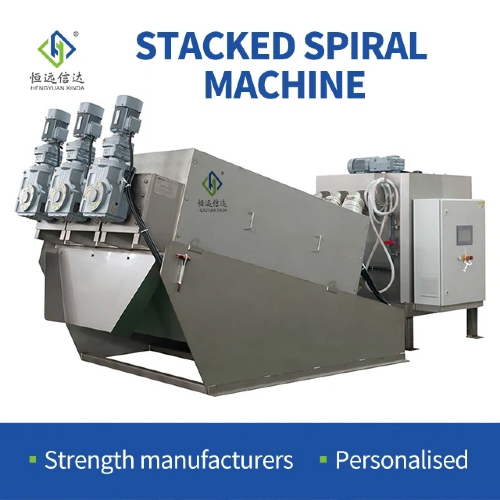
A Stacked Screw Machine, often known as a screw press dewatering machine, is an advanced piece of equipment designed specifically for sludge treatment. The technology works by using screw presses to apply mechanical pressure to waste sludge, effectively separating water from solids. This process results in higher dewatering efficiency than many traditional systems, which is essential for industries where large quantities of sludge are produced.
How Does It Work?
The core working principle of the Stacked Screw Machine revolves around a screw press. Here's a step-by-step breakdown of the dewatering process:
Sludge Inlet: Sludge enters the machine through a hopper and is introduced into a series of stacked screw presses.
Compression: The sludge is then pushed forward by a rotating screw. As it moves through the machine, the sludge is compressed, causing water to separate from the solid particles.
Separation: The separated liquid (often referred to as filtrate) exits through a filtration mechanism, while the solid sludge continues its way through the screw press.
Discharge: The final dewatered sludge is then discharged from the machine, ready for disposal or further processing.
The Basic Components of a Stacked Screw Machine
Component | Description |
Screw Press | The main component that applies pressure to the sludge to extract water. |
Filtration System | The system used to filter out the liquid from the solid waste in the sludge. |
Sludge Hopper | Where the incoming sludge is introduced to the machine. |
Discharge Outlet | The opening where the dewatered sludge is expelled from the machine. |
Key Features and Benefits of the Stacked Screw Machine
1. High Efficiency in Dewatering
One of the standout features of the Stacked Screw Machine is its high dewatering efficiency, achieving up to 80%-90% water removal. This efficiency is particularly beneficial for industries with large-scale sludge production. By efficiently removing excess water, the machine reduces the volume of sludge, making disposal easier and more cost-effective.
Increased Capacity: The high efficiency allows for the processing of larger volumes of sludge without compromising performance.
Cost Savings: With the reduced sludge volume, transportation and disposal costs are significantly lower.
2. Compact Design and Space-Saving
Unlike traditional dewatering systems such as belt filter presses or centrifuges, the Stacked Screw Machine is much more compact. Its stacked configuration allows it to fit into tight spaces, which is especially advantageous for industries with limited space.
Footprint: The smaller footprint makes it ideal for companies operating with spatial constraints.
Modular Design: This compactness also means that multiple units can be installed in parallel to increase capacity without requiring extensive space.
3. Low Energy Consumption
Energy consumption is a major concern for wastewater treatment equipment, especially in industries looking to reduce operational costs. The Stacked Screw Machine stands out for its low energy consumption compared to conventional systems. This efficiency is achieved through its optimized design, which reduces the need for excessive mechanical power or high-speed operations.
Energy Efficient: The machine operates at a relatively low power, reducing energy bills for large facilities.
Long-Term Savings: Over time, the energy savings can offset the initial purchase cost of the machine.
4. Automatic Operation
Automation is another key benefit of the Stacked Screw Machine. Once installed, the machine can operate with minimal human intervention. It is equipped with an automatic control system that adjusts operating parameters based on real-time conditions, ensuring consistent and reliable performance.
Reduced Labor Costs: Since the machine is largely automatic, the need for manual operation is reduced.
Consistent Output: Automation ensures that dewatering processes are stable and uniform, maintaining optimal output quality.
5. Durability and Low Maintenance
The Stacked Screw Machine is known for its durability and requires minimal maintenance. The system is designed with high-quality materials that can withstand the wear and tear from continuous operation. Additionally, its simple design minimizes the risk of breakdowns.
Durable Construction: Built to last, the machine can function for many years with proper maintenance.
Minimal Downtime: The machine’s robust construction reduces the chances of mechanical failure, ensuring more uptime.
Applications of the Stacked Screw Machine
1. Municipal Wastewater Treatment
Municipalities worldwide face the challenge of managing sewage and wastewater from urban areas. The Stacked Screw Machine is ideal for municipal wastewater treatment plants, where large volumes of sewage sludge are produced daily.
Efficient Sludge Management: The machine ensures that the sludge is dewatered to the required standards before disposal or further treatment.
Improved Wastewater Treatment: The high performance and low maintenance make it suitable for long-term use in municipal settings.
2. Industrial Wastewater Treatment
Industries such as chemical production, food processing, and pharmaceuticals generate substantial amounts of wastewater, which must be treated to meet environmental regulations. The Stacked Screw Machine is used to treat the wastewater generated by these industries.
Sludge from Food Production: Ideal for industries like dairy, meat, and food manufacturing, where high volumes of wastewater with high organic content are produced.
Chemical Wastewater Treatment: Can handle challenging wastewater from chemical processes while providing effective sludge dewatering.
3. Agricultural Wastewater Management
In agricultural settings, particularly in livestock farms and dairies, wastewater treatment is crucial for managing waste materials like manure. The Stacked Screw Machine is used to treat the wastewater and separate solid waste from water efficiently.
Manure Treatment: The machine’s ability to handle high volumes of organic sludge makes it suitable for agricultural applications.
Reduction of Environmental Impact: Helps minimize the environmental impact of farming operations by ensuring waste is processed effectively.
4. Additional Industries
The Stacked Screw Machine is also useful in industries such as textile manufacturing, paper mills, and other sectors where large quantities of sludge are generated. Its versatile design allows it to handle a variety of sludge types and volumes.
Advantages Over Traditional Sludge Dewatering Methods
1. Cost-Effectiveness
In comparison to traditional methods like centrifuges or belt filter presses, the Stacked Screw Machine is a more cost-effective option for sludge dewatering. This is due to its low energy consumption, minimal maintenance needs, and reduced sludge volume after dewatering.
Equipment Type | Energy Consumption | Maintenance Needs | Sludge Disposal Cost | Efficiency |
Stacked Screw Machine | Low | Low | Low | High |
Centrifuge | High | High | High | High |
Belt Filter Press | Moderate | Moderate | Moderate | Moderate |
2. Environmental Impact
The Stacked Screw Machine has a lower environmental footprint than traditional dewatering systems. The reduction in sludge volume means less waste to be disposed of, and its energy-efficient design helps reduce overall environmental impact.
Lower Carbon Footprint: Reduced energy consumption translates to lower emissions.
Waste Reduction: With its efficient dewatering capability, less sludge is generated, reducing the burden on waste disposal systems.
How to Choose the Right Stacked Screw Machine for Your Needs
When selecting a Stacked Screw Machine, it’s essential to consider the following factors to ensure the best fit for your specific application:
Sludge Volume: The amount of sludge produced in your facility will determine the capacity you need.
Sludge Characteristics: Different types of sludge (e.g., municipal, chemical, or agricultural) may require different machine configurations.
Space Availability: The compact design of the machine makes it suitable for smaller spaces, but capacity considerations are also important.
Wastewater Treatment Standards: Ensure that the machine meets the necessary regulations for your industry.
Conclusion
The Stacked Screw Machine is a groundbreaking solution in wastewater treatment, providing exceptional efficiency, cost savings, and a minimal environmental footprint. Its capability to process large volumes of sludge while achieving high dewatering efficiency makes it an essential asset for municipalities, industries, and agricultural applications. By incorporating this advanced technology, businesses can significantly reduce operational costs and strengthen their sustainability initiatives.
At Weifang Hengyuan Environmental Protection Water Treatment Equipment Co., Ltd., we specialize in delivering top-tier water treatment solutions, including the Stacked Screw Machine, designed to meet diverse industrial needs. Our team is committed to offering tailored advice and support, ensuring your wastewater treatment processes are both efficient and environmentally responsible. To learn more about how our innovative solutions can benefit your business, we encourage you to contact us today for personalized consultations and more information. Let us help you optimize your wastewater management systems while contributing to a greener, more sustainable future.
FAQ
What types of sludge can be processed by the Stacked Screw Machine?
The Stacked Screw Machine can process various types of sludge, including municipal, industrial, and agricultural. It is suitable for handling sludge with high organic content as well as more challenging waste materials.
How does the Stacked Screw Machine compare to a centrifuge in terms of performance?
The Stacked Screw Machine is more energy-efficient and cost-effective compared to a centrifuge. It has lower energy consumption, minimal maintenance requirements, and a smaller footprint, making it ideal for long-term use in various industries.
What is the maintenance requirement for a Stacked Screw Machine?
The Stacked Screw Machine is designed with low maintenance needs. Its robust construction and automated operation reduce the need for regular manual intervention. Periodic checks and cleaning are typically required.
Can the Stacked Screw Machine be used in small-scale wastewater treatment plants?
Yes, the Stacked Screw Machine is highly versatile and can be used in small to large-scale wastewater treatment plants. Its compact design allows it to fit into tight spaces while still providing efficient dewatering.
 English
 العربية
 Français
 Русский
 Español
 Português
 Deutsch
 italiano
 日本語
日本語 한국어
한국어 Nederlands
 Tiếng Việt
 ไทย
ไทย Türkçe
 አማርኛ
አማርኛ ພາສາລາວ
 Bahasa Melayu
 Filipino
 Bahasa Indonesia
 magyar
 Română
 Монгол
 қазақ
қазақ Српски
 हिन्दी
 فارسی
فارسی Kiswahili
 Slovenščina
 Svenska
 Ελληνικά
 Suomi
Suomi Dansk
Dansk Shqip
Shqip বাংলা
বাংলা Oʻzbekcha
 Azərbaycan dili
 íslenska


