A Stacked Screw Machine is a revolutionary technology used for dewatering sludge in wastewater treatment systems. This highly efficient system uses a screw-based mechanism to separate water from solids, ensuring that the wastewater treatment process runs smoothly with minimal maintenance and energy consumption. In this article, we will explore the working principle of a stacked screw machine, its key features, benefits, applications, and how to maintain it for optimal performance.
1. The Concept of Screw-Based Dewatering Systems
What is a Screw Machine?
A screw machine is a type of mechanical equipment designed for continuous processing. The principle behind a screw machine is straightforward—materials are fed into a spiral screw, which then pushes and compresses the material, separating the liquid from the solid. This mechanism is widely used in various industrial applications, including food processing, chemical manufacturing, and wastewater treatment.
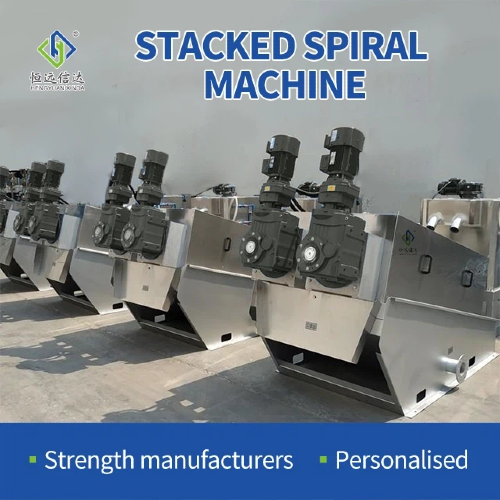
The Stacked Screw Machine is an enhanced version of the traditional screw-based system. It is engineered to handle larger volumes of sludge and offer a higher degree of efficiency by incorporating stacked plates and continuous pressure application.
Why Use a Stacked Screw Design?
The design of a stacked screw machine enhances the traditional screw mechanism by creating more surface area for compression. In a stacked screw design, multiple layers of screws are stacked together, allowing for a more consistent and efficient dewatering process. This design improves both the throughput and the dewatering quality by applying continuous mechanical pressure.
This design is particularly beneficial in wastewater treatment, where it efficiently handles large volumes of sludge from municipal and industrial wastewater treatment plants.
2. The Working Principle of Stacked Screw Machine
The Stacked Screw Machine operates using a multi-step process to separate water from sludge. The following stages outline its working principle:
Step-by-Step Process: How It Works
1. Feed Stage: Introduction of Sludge
The first step in the process is the introduction of the sludge or slurry into the machine. The sludge is typically fed into the machine through an inlet where it is uniformly distributed onto the spiral screw conveyor. The screw then begins to rotate, moving the sludge forward.
2. Concentration Stage: Gravity and Pressure Separation
Once the sludge is introduced, the machine uses gravity to initially separate the water from the solids. The water drains through perforated screens, while the solids begin to consolidate in the machine’s screw chamber. As the screw turns, the material is subjected to a compressive force, and water is expelled more efficiently.
3. Dewatering Stage: Mechanical Pressure Application
In the dewatering stage, the screw applies mechanical pressure as it moves the sludge toward the discharge end. The stacked design of the screw plates allows for increasing pressure, which forces more water to separate from the solids. This is where the majority of the dewatering happens. The screw’s design allows it to apply the right amount of pressure consistently across the entire length, improving the overall dewatering process.
4. Discharge: Release of Concentrated Sludge
Finally, the concentrated sludge is expelled from the machine. The remaining liquid is drained out, and the solidified sludge is removed. The treated water is often collected in a separate container for reuse or further treatment.
Role of Spiral Screw and the Stacked Plates
The spiral screw mechanism in a stacked screw machine plays a vital role in controlling the movement of the sludge, applying pressure, and ensuring efficient liquid-solid separation. The stacked plates enhance the dewatering process by allowing for more uniform compression across the material.
The combination of the screw and stacked plates is particularly effective at handling sludge with varying solid content and viscosity. This flexibility makes the stacked screw machine ideal for municipal and industrial applications.
3. Key Features of a Stacked Screw Machine
Self-Cleaning Mechanism
One of the standout features of the Stacked Screw Machine is its self-cleaning capability. The spiral screw’s continuous rotation helps to maintain smooth operation by preventing clogging within the system. In most traditional dewatering systems, the buildup of sludge can cause blockages, leading to maintenance downtime. However, in a stacked screw machine, the self-cleaning mechanism ensures the system remains clear and operational at all times, reducing maintenance requirements.
Continuous Operation
Another key benefit of the stacked screw machine is its ability to run continuously. This is particularly advantageous for large-scale operations, such as municipal wastewater treatment plants and industrial wastewater treatment processes. The system is designed to handle large volumes of sludge efficiently and can operate 24/7 without significant downtime.
The continuous operation feature helps improve processing efficiency and reduces energy consumption compared to batch processing systems like centrifuges or belt presses. The ability to process large amounts of sludge in a consistent manner also makes it more cost-effective in the long run.
Adaptability to Various Types of Sludge
A stacked screw machine is designed to handle a wide range of sludge types. Whether the sludge is highly concentrated or diluted, the system can adapt to ensure efficient dewatering. Its flexibility makes it suitable for various industries, including food processing, chemical production, and municipal wastewater treatment.
This adaptability also means the stacked screw machine can handle sludges with different viscosities, making it a versatile option for plants with varying waste streams.
4. Benefits of Using a Stacked Screw Machine
Improved Efficiency
One of the primary benefits of the Stacked Screw Machine is its ability to process large quantities of sludge efficiently. The use of stacked plates and spiral screws ensures that the sludge is compressed effectively, and more water is separated from the solid material. This leads to faster processing times and higher throughput, which is crucial in high-demand environments like municipal wastewater treatment plants.
Lower Operational Costs
Thanks to its self-cleaning mechanism and continuous operation, the stacked screw machine requires less maintenance and fewer operational interventions compared to traditional systems. This reduces labor costs and downtime, leading to lower operational costs over time. Additionally, its energy-efficient design ensures that it operates at a lower cost compared to other dewatering technologies.
Environmentally Friendly
By effectively dewatering sludge and reducing water content, the stacked screw machine helps reduce the volume of waste sent for disposal. This leads to a reduction in landfill use and lower transportation costs. Additionally, the treated water collected from the system can often be reused, contributing to more sustainable wastewater treatment practices.
5. Applications of Stacked Screw Machines
Municipal Wastewater Treatment
Municipal wastewater treatment plants are one of the primary applications for stacked screw machines. These machines help manage the large volumes of sludge produced during the treatment process. By separating water from the sludge, the system makes it easier to dispose of or further treat the remaining solids.
Industrial Wastewater
In industries like food processing, chemical production, and textiles, large amounts of wastewater are produced. The Stacked Screw Machine is effective at handling industrial wastewater sludge, ensuring that the waste is dewatered efficiently for disposal or further processing.
Agricultural Waste
Stacked screw machines are also used in agricultural wastewater treatment. For example, farms that process animal waste or food products can use this system to manage the sludge produced during processing. The system helps to efficiently separate solids from the wastewater, ensuring proper disposal and environmental compliance.
6. Maintenance and Care for a Stacked Screw Machine
Routine Cleaning and Inspection
To maintain the optimal performance of a stacked screw machine, regular cleaning and inspection are necessary. Operators should inspect the screw for wear and tear and clean any debris that may have accumulated in the system. This ensures that the machine continues to operate efficiently and prevents clogging or damage to the components.
Common Maintenance Issues
While the self-cleaning mechanism reduces maintenance needs, there are some common issues to watch out for, such as:
Clogging due to large debris or high-viscosity sludge
Wear and tear on the screw or stacked plates
Leakage in the water discharge system
These issues can be resolved with regular inspections and timely repairs, ensuring the system remains operational.
How to Extend the Lifespan of the Machine
To extend the lifespan of a stacked screw machine, it is important to:
Perform regular maintenance checks
Keep the system free from corrosive chemicals
Ensure the sludge is evenly fed into the machine to prevent uneven wear
7. Comparison of Stacked Screw Machine with Other Dewatering Technologies
Feature | Stacked Screw Machine | Centrifuge | Belt Filter Press |
Continuous Operation | Yes | Yes | No |
Self-Cleaning | Yes | No | No |
Energy Efficiency | High | Moderate | Low |
Maintenance Requirements | Low | High | Moderate |
Sludge Type Adaptability | High | Moderate | Low |
Water Recovery Rate | High | High | Low |
8. Conclusion
The Stacked Screw Machine offers an efficient, reliable, and cost-effective solution for dewatering sludge in both industrial and municipal applications. Its innovative design, coupled with continuous operation and self-cleaning capabilities, makes it the perfect choice for large-scale wastewater treatment projects. By enhancing operational efficiency, reducing maintenance costs, and minimizing environmental impact, the stacked screw machine plays a crucial role in modern wastewater management.
At Weifang Hengyuan Environmental Protection Water Treatment Equipment Co., Ltd., we are committed to providing advanced water treatment solutions that meet the highest standards. Our expertise in designing and manufacturing cutting-edge equipment ensures that your wastewater treatment process is optimized for both performance and sustainability.
For more information or to discuss how our Stacked Screw Machine can benefit your operations, feel free to contact us. Let us help you achieve your wastewater management goals with the most reliable, energy-efficient equipment available.
9. FAQ
Q1: What types of sludge can the Stacked Screw Machine handle?
Answer: The Stacked Screw Machine can handle various types of sludge, including both high and low concentration sludges from municipal and industrial wastewater treatment processes.
Q2: How does the self-cleaning feature of the Stacked Screw Machine work?
Answer: The spiral screw’s continuous motion prevents clogging by keeping the internal components clear of debris, ensuring smooth operation.
Q3: What is the average lifespan of a Stacked Screw Machine?
Answer: With proper maintenance, the Stacked Screw Machine can last for many years, typically 10-15 years.
Q4: Can the Stacked Screw Machine be used in industries other than wastewater treatment?
Answer: Yes, it is used in various industries such as food processing, chemicals, and agriculture, where solid-liquid separation is needed.
Q5: How much energy does a Stacked Screw Machine consume?
Answer: The Stacked Screw Machine is energy-efficient, consuming less energy than traditional systems like centrifuges or belt presses.
 English
 العربية
 Français
 Русский
 Español
 Português
 Deutsch
 italiano
 日本語
日本語 한국어
한국어 Nederlands
 Tiếng Việt
 ไทย
ไทย Türkçe
 አማርኛ
አማርኛ ພາສາລາວ
 Bahasa Melayu
 Filipino
 Bahasa Indonesia
 magyar
 Română
 Монгол
 қазақ
қазақ Српски
 हिन्दी
 فارسی
فارسی Kiswahili
 Slovenščina
 Svenska
 Ελληνικά
 Suomi
Suomi Dansk
Dansk Shqip
Shqip বাংলা
বাংলা Oʻzbekcha
 Azərbaycan dili
 íslenska


