Industrial and municipal water treatment facilities often fall into a massive procurement trap. They purchase an Ozone Generator based purely on its advertised output specifications. Weeks later, they realize their system fails to achieve the targeted dissolved ozone levels in their process water. Generating ozone gas and successfully dissolving it into a liquid remain two entirely separate engineering challenges. High production capability means almost nothing if you lack highly efficient mass transfer. You cannot simply blast gas into a tank and expect optimal purification.
Engineering and procurement teams must evaluate generation metrics alongside the physical dissolution infrastructure. You must look at both sides of the equation. This combined evaluation ensures environmental compliance and controls ongoing operating expenses. By looking closely at the entire injection strategy, you avoid over-capitalizing on oversized, inefficient equipment. You will learn exactly how to balance system capacity with mixing efficiency.
Key Takeaways
- Ozone generation capacity is a measure of output (e.g., grams per hour), but true system performance is dictated by the ozone dissolution rate (Mass Transfer Efficiency).
- Higher ozone concentration in the feed gas exponentially improves gas-water mixing efficiency and reduces contact tank footprint.
- Evaluating the ozone contact system (Venturi injection vs. fine bubble diffusion) is just as critical as selecting the generator itself.
The Procurement Trap: Generation Capacity vs. True Dissolution
Many buyers misunderstand the relationship between theoretical yield and practical application. You might buy a 500 g/hr unit. You expect 500 grams of reactive ozone to enter your process water. This assumption rarely holds true in real-world environments. A large discrepancy exists between what a machine creates and what the water actually absorbs.
To evaluate performance accurately, we must define three separate metrics:
- Generation Capacity: The total mass of ozone produced per unit of time (typically measured in grams per hour or pounds per day).
- Applied Dose: The gross amount of ozone gas introduced into the water stream.
- Dissolved Dose: The actual ozone concentration achieved within the water to meet oxidation or disinfection success criteria.
The definitive key performance indicator here is Mass Transfer Efficiency (MTE). MTE measures the percentage of applied ozone that successfully dissolves into the fluid. A smaller generator paired with a 95% MTE system performs much better than a larger generator saddled with a 70% MTE system. High efficiency lowers your energy consumption drastically. It also reduces your oxygen feed costs. You stop paying to generate gas that simply escapes into the atmosphere.
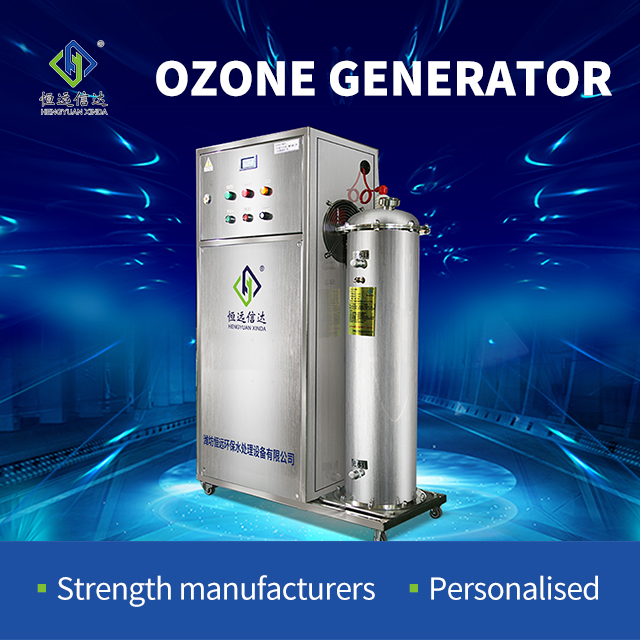
Sizing Your Ozone Generator: Key Evaluation Dimensions
Buyers must evaluate ozone concentration alongside sheer volumetric capacity. Concentration is typically measured in weight percentage. Most industrial applications require concentrations between 6% and 12% or higher. Do not evaluate a generator solely on how many grams it pushes out. Look at how densely packed those grams are within the carrier gas.
The physics of mass transfer make concentration vital. Henry’s Law dictates how gases dissolve into liquids. Higher gas-phase concentrations directly increase the driving force for dissolving ozone into water. When you increase the concentration, you exponentially improve your ozone dissolution rate. The gas naturally wants to move into the liquid phase faster.
You must also assess your feed gas realities. Generators typically use either dried air or high-purity oxygen. High-purity oxygen systems utilize Pressure Swing Adsorption (PSA) or Liquid Oxygen (LOX). Oxygen-fed systems yield much higher ozone concentrations. They reduce the total volume of gas you need to dissolve. Less gas volume means smaller bubbles and significantly easier mixing.
Finally, you cannot ignore cooling requirements. Ozone production generates significant heat. Heat destroys ozone rapidly. Your ozone generation capacity drops drastically if your cooling water system is undersized. A powerful generator becomes weak quickly if the internal temperature rises. You must size your chillers to handle peak summer loads.
Comparing Ozone Gas-Water Mixing Technologies
You must choose the right structural approach for your ozone contact system. Different applications require different mixing architectures. The two dominant solution categories are fine bubble diffusers and sidestream injection systems.
Performance Profiles of Mixing Architectures
| System Architecture | Ideal Applications | Typical Efficiency Limits | Primary Operational Risks |
| Fine Bubble Diffusers (Basin Contactors) | Large municipal plants, deep basin setups, high continuous flow rates | 75% to 85% mass transfer | High physical footprint, gas channeling, diffuser fouling over time |
| Venturi Injection with Static Mixers | Industrial skids, fast reaction requirements, packaged purification units | 90% to 98% mass transfer | Requires booster pumps, strict pressure differential monitoring |
Fine bubble diffusers utilize porous stones or membranes at the bottom of deep contact basins. They work best for massive municipal plants. They handle high flow rates easily. However, they carry distinct risks. Their MTE is generally lower, hovering around 75% to 85%. They require a massive physical footprint. Gas channeling occurs frequently, and the diffusers experience severe fouling over time.
Conversely, Venturi injection combined with static mixers offers superior performance for industrial facilities. This sidestream approach is ideal for packaged water purification equipment. It provides exceptional ozone gas-water mixing efficiency, often reaching 90% to 98%. You gain a much smaller system footprint and highly precise dosing control. The primary risk involves system complexity. This method requires additional booster pumps. Engineers must design precise pressure differentials across the injector to maintain vacuum suction.
Hidden OpEx and System Integration Risks
You must view the ozone dosing system as a holistic loop. Many buyers mistakenly focus only on the core generation unit. The generator usually accounts for only 30% to 40% of the total system cost. The supporting infrastructure drives your long-term operational expenses.
Energy consumption represents your true ongoing cost. You must calculate the power draw of the entire system. Do not just look at the generator's power rating. You must include the oxygen concentrator, the dedicated water chiller, and the injection booster pumps. These peripheral components often consume more electricity than the ozone cells themselves.
Safety and environmental compliance represent another critical integration risk. Any undissolved ozone creates hazardous off-gassing. You must evaluate your ozone destruct unit carefully. Facilities must safely vent and destroy excess gas to meet OSHA and EPA workplace safety compliance. A failing destruct unit halts your entire production line.
Material compatibility ruins many poorly planned installations. Ozone is a highly aggressive oxidant. You face severe implementation risks if you use improper seals or piping. Infrastructure must use 316L Stainless Steel or specific fluoropolymers like PTFE and PVDF. Standard rubber seals and basic sensors degrade rapidly under prolonged exposure, causing dangerous leaks.
Shortlisting Vendors: A Buyer’s Decision Framework
Transition your evaluation process from reading spec sheets to demanding concrete outcomes. A vendor might claim massive output volumes. You must ask them to guarantee the final dissolved concentration instead.
Demand complete transparency through pilot testing. Insist on bench-scale testing before finalizing full-scale procurement. Every water matrix is chemically unique. You need to determine the exact ozone demand and decay rate of your specific facility water. Guessing these numbers leads to catastrophic system sizing errors.
Ensure the vendor provides robust performance guarantees. Their Service Level Agreement (SLA) should guarantee the dissolved ozone concentration in the process fluid. An SLA guaranteeing only the generator's baseline output in a vacuum protects the vendor, not you. Hold them accountable for the final mass transfer results.
To finalize your Request for Proposal (RFP), implement strict next-step actions. Create an RFP checklist encompassing the following areas:
- Comprehensive site audits for physical footprint limitations.
- Feed gas availability and on-site oxygen generation capabilities.
- Cooling water capacity and maximum summer temperature thresholds.
- Native integration capabilities with existing SCADA or PLC control systems.
Conclusion
Successful water treatment relies entirely on the synergy between the ozone generator’s output and the physical dissolution infrastructure. Buying a massive generator cannot solve poor mixing dynamics. You must balance generation capacity with high-efficiency mass transfer technologies.
We encourage buyers to shift their procurement focus immediately. Stop trying to simply buy an ozone generator. Instead, invest your capital in an integrated, highly efficient mass transfer system. This holistic approach saves energy, reduces oxygen waste, and guarantees process success.
Engineering teams should consult with experienced system integrators early in the design phase. Model your facility's specific water demand accurately. Evaluate the supporting infrastructure deeply before finalizing any CapEx budgets.
FAQ
Q: How does temperature affect the ozone dissolution rate?
A: Cooler water holds more dissolved gas. As water temperature rises, ozone solubility decreases dramatically. Its half-life also shortens in warmer conditions. You will require higher generation capacity to compensate for these physical losses. Engineers must design systems based on the maximum expected summer water temperatures.
Q: What is a good Mass Transfer Efficiency (MTE) for industrial water purification equipment?
A: Modern, well-engineered sidestream injection systems should target 90% to 95% MTE or higher. You achieve this through precise Venturi injector sizing and appropriately placed static mixers. High MTE minimizes wasted oxygen and reduces off-gas destruction requirements.
Q: Can I upgrade my existing ozone contact system without buying a new generator?
A: Yes, retrofitting older bubble diffusion basins is a viable strategy. You can add Venturi injectors or inline static mixers to your existing architecture. This increases your dissolved ozone levels significantly without replacing the primary generator unit.
Q: Why is my ozone generator producing less ozone than its rated capacity?
A: Several operational factors reduce output. Inadequate feed gas dew point introduces moisture, which severely limits production. Insufficient cooling water flow allows heat buildup, destroying generated ozone. Declining dielectric tube performance also drops efficiency, requiring immediate routine maintenance.
 English
 العربية
 Français
 Русский
 Español
 Português
 Deutsch
 italiano
 日本語
 한국어
 Nederlands
 Tiếng Việt
 ไทย
 Türkçe
 አማርኛ
 ພາສາລາວ
 Bahasa Melayu
 Filipino
 Bahasa Indonesia
 magyar
 Română
 Монгол
 қазақ
 Српски
 हिन्दी
 فارسی
 Kiswahili
 Slovenščina
 Svenska
 Ελληνικά
 Suomi
 Dansk
 Shqip
 বাংলা
 Oʻzbekcha
 Azərbaycan dili
 íslenska


