Water treatment plants serve as the backbone of public health protection. You must ensure safe, potable water delivery every single day. For decades, facilities relied heavily on legacy bulk chemicals to achieve these goals. Today, utility managers are increasingly moving away from these outdated dependencies. They seek localized chemical production to mitigate extreme supply chain volatility. Operators also want to eliminate the severe safety liabilities associated with hazardous material handling.
Relying on purchased bulk liquid chlorine introduces compounding daily challenges for operators. Typical 12.5% to 15% concentration solutions degrade rapidly while sitting in bulk storage tanks. This unavoidable chemical degradation forces facilities to overfeed their systems constantly. It forces utility managers to navigate hazardous material transportation risks regularly. It also creates strict regulatory compliance burdens across municipal departments.
We understand these mounting operational pressures deeply. You need a reliable, evidence-oriented framework to navigate complex facility upgrades safely. We aim to help plant managers, municipal engineers, and procurement teams assess their options objectively. You will discover whether transitioning to a Sodium Hypochlorite Generator proves operationally and financially viable for your specific site. Our guide rigorously compares bulk dosing realities against the limitations of localized generation.
Key Takeaways
- Safety & Compliance: On-site generation produces a low-concentration (0.8%) solution, largely eliminating hazardous chemical transport and exempting facilities from strict EPA Risk Management Plan (RMP) reporting.
- Chemical Stability: Unlike purchased bulk hypochlorite, which loses strength rapidly and forms harmful chlorate byproducts, on-site generated solutions maintain their concentration over time.
- Cost Dynamics: Purchased liquid chlorine offers lower upfront capital costs but highly volatile operational expenses; on-site generation requires higher initial CAPEX but stabilizes long-term OPEX through raw material reliance (only salt, water, and power).
- Footprint & Infrastructure: Transitioning to on-site production requires a dedicated footprint for brine tanks, softeners, electrolyzers, and safe hydrogen venting systems.
The Business Case: Why Facilities Are Rethinking Their Water Treatment Disinfection System
Commercial liquid hypochlorite carries significant hidden costs affecting municipal budgets. Facilities pay steep delivery premiums just for hazardous freight transportation. Fuel surcharges and hazardous material handling fees inflate your operational budgets constantly. Strict containment regulations severely restrict your maximum chemical inventory limits on-site. Industrial supply shortages frequently drive up fluctuating market prices unexpectedly.
Bulk 12.5% hypochlorite faces a harsh chemical reality during standard storage. It degrades significantly within 30 days of delivery. High summer temperatures accelerate this chemical breakdown drastically inside storage tanks. The solution loses crucial active strength very quickly. Plants must continuously overfeed the degrading chemical. They do this simply to achieve target residual levels in the finished water. This forced overfeeding increases daily operational costs substantially.
More dangerously, this degradation drives up Disinfection Byproduct (DBP) formation across your entire distribution network. Degrading bleach converts into harmful chlorates and perchlorates. These byproducts pose significant compliance risks regarding drinking water safety standards.
We must view this operational shift strategically rather than purely mechanically. Upgrading your water treatment disinfection system represents more than simple equipment replacement. It delivers long-term supply chain autonomy for the municipality. Local production shields your facility from external market shocks entirely. It directly reduces daily risk for operators. You gain total control over your exact chemical inventory production.
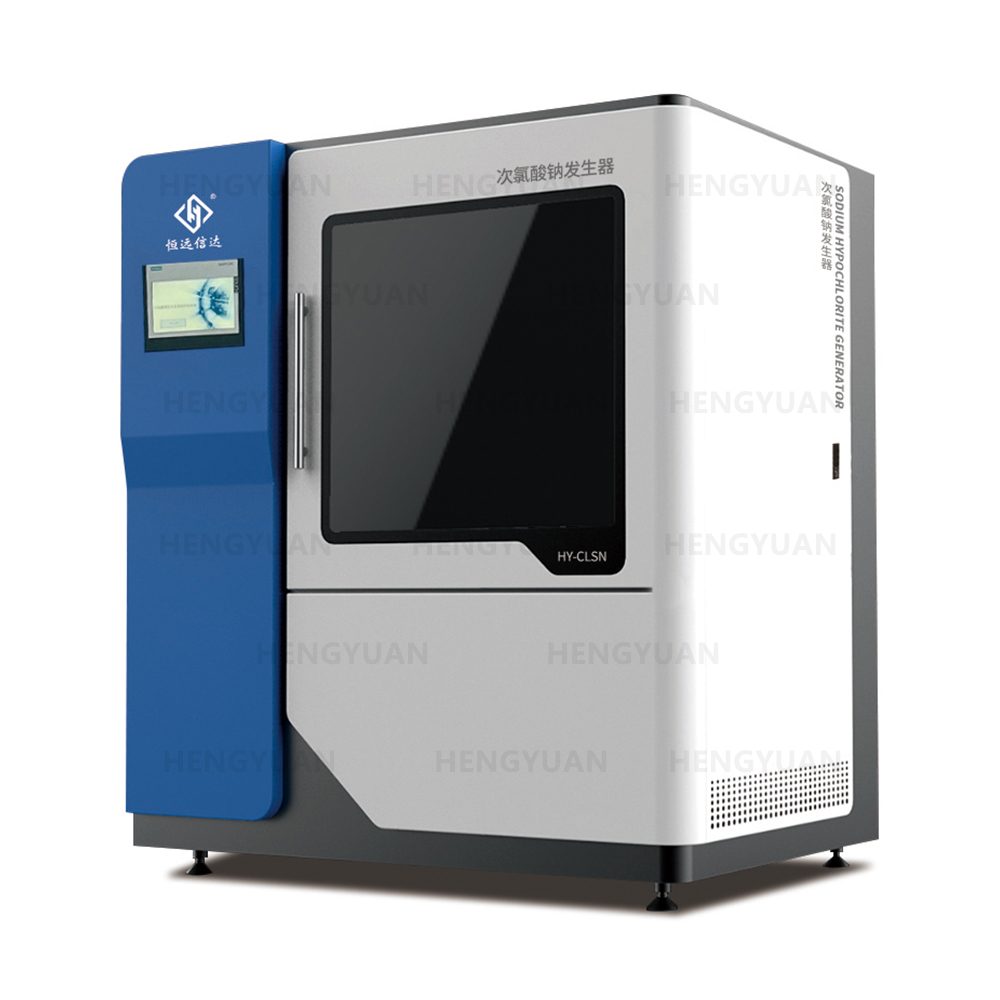
Core Technologies: Bulk Dosing vs. A Sodium Hypochlorite Generator
Purchased liquid chlorine systems rely heavily on external logistics and industrial suppliers. You need closely scheduled bulk deliveries from regional chemical distributors. Facilities must maintain large bulk storage tanks holding thousands of gallons. You must build expensive, double-walled containment areas to capture potential catastrophic spills. You also operate a standard chlorine dosing system to push the concentrated chemical into the process water. This legacy approach suits very specific environments. It remains best for facilities facing strict upfront capital budget constraints. It also fits older sites completely lacking indoor physical space for new equipment installations.
Conversely, On-Site Generation (OSHG) systems manufacture disinfection chemistry locally on demand. You utilize highly specialized brine electrolysis equipment to create your active disinfection solution. The integrated system converts three simple ingredients into a powerful disinfectant. It uses completely softened water, food-grade solar salt, and standard electricity. It converts these inputs into a highly stable 0.8% sodium hypochlorite mixture.
The manufacturing mechanism is straightforward yet heavily engineered for reliability. Your setup requires a dedicated brine saturation tank and a commercial dual-tank water softener. It relies on a precision electrolytic cell array and a heavy-duty DC power rectifier. Dedicated product storage tanks hold the finished solution safely. This electrochemical process yields a highly reliable liquid chlorine alternative. The resulting low-concentration solution carries absolutely no hazardous chemical classification. Operators can handle it easily without full-body protective suits. You avoid the extreme dangers of concentrated bleach spills completely.
5 Key Evaluation Dimensions for Plant Upgrades
You must evaluate five primary dimensions before upgrading your municipal treatment plant. We outline these crucial criteria below to guide your objective decision-making process.
- Safety and Regulatory Compliance: Handling 12.5% bulk hypochlorite involves severe OSHA and EPA regulatory burdens. Operators require extensive personal protective equipment for daily tasks. You must maintain massive spill containment zones around all storage tanks. Facilities often fall under strict EPA Risk Management Plan (RMP) mandates. The non-hazardous 0.8% generated solution eliminates most of these reporting mandates.
- Lifecycle Costs (CAPEX vs. OPEX): Bulk liquid means perpetual, highly variable operational expenses. Delivery surcharges and chemical price spikes inflate your monthly bills unpredictably. OSHG demands heavy initial capital investment for specialized equipment and professional installation. However, it delivers incredibly predictable long-term operational expenses. You only purchase raw salt and electrical power.
- DBP Mitigation and Water Quality: High-strength commercial bleach forms harmful chlorates rapidly as it degrades. The ultra-low concentration of localized sodium hypochlorite production prevents this rapid chemical degradation entirely. It minimizes chlorate and perchlorate formation highly effectively over long periods. This impressive chemical stability actively aids strict regulatory compliance for municipal drinking water standards.
- Supply Chain Resilience: Regional chemical manufacturing shortages delay bulk deliveries constantly. Commercial trucking issues leave rural plants highly vulnerable to dangerous stockouts. OSHG requires you to stockpile inert solar salt instead. Salt remains incredibly cheap and universally abundant globally. It easily bypasses complex hazardous transit regulations entirely.
- Facility Footprint and Utility Demands: Assess your available indoor physical space carefully. OSHG skids require a dedicated, climate-controlled footprint to protect the electronics. You must secure reliable three-phase power supplies. Consistent municipal water pressure is strictly necessary for the softeners. You also need upgraded HVAC systems for safe room ventilation.
Comparison Chart: Bulk Hypochlorite vs. On-Site Generation
| Evaluation Dimension | Purchased Bulk Liquid (12.5%) | On-Site Generation (0.8%) |
| Safety & Compliance | High hazard risk; triggers strict EPA/OSHA compliance mandates. | Low risk profile; generally exempt from rigorous RMP reporting. |
| Chemical Stability | Degrades rapidly; loses up to 20% active strength within 30 days. | Highly stable; maintains active strength for several months easily. |
| Supply Chain | Highly vulnerable to regional shortages and freight logistics delays. | Extremely resilient; relies only on stockpiled salt, water, and power. |
| Initial Capital Setup | Low setup costs; utilizes basic tanks and chemical metering pumps. | High upfront equipment costs; requires specialized installation labor. |
| Disinfection Byproducts | High chlorate formation risk due to natural chemical degradation. | Minimal chlorate formation; ensures better long-term water quality. |
Implementation Realities and Adoption Risks of On-Site Generation
Every industrial technology carries specific implementation realities. You must address vital infrastructural prerequisites before successfully installing any OSHG unit.
Incoming water quality acts as a strict operational prerequisite. OSHG systems strictly require completely softened water to function. Hard water causes immediate and severe operational problems inside the unit. Calcium and magnesium ions will rapidly scale the internal metallic components. This hard mineral scaling permanently damages the delicate titanium electrolytic cells. You must design redundancy into your water softening pretreatment systems.
We must transparently discuss ongoing maintenance burdens. OSHG fundamentally shifts labor away from hazardous chemical handling. It redirects operator focus heavily toward mechanical equipment upkeep. You must perform periodic acid washing of the electrolysis cells regularly. Operators use dilute muriatic acid to safely remove microscopic mineral deposits. They also need to conduct routine water softener maintenance, including frequent brine tank cleanings.
Hydrogen gas management represents a critical facility safety requirement. The electrochemical electrolysis process generates hydrogen gas as a natural, unavoidable byproduct. You must safely dilute this explosive gas below standard combustible limits. Facilities require dedicated forced-air blower systems. These specialized blowers safely vent the diluted hydrogen gas completely outside the building.
Operator training paradigms will shift dramatically during this transition. Your team currently manages bulk chemical deliveries and simple pump calibrations. They must learn to meticulously monitor electrical currents instead. They will check brine saturation levels and water hardness daily. They will focus heavily on maintaining long-term cell health rather than managing hazardous spills.
Shortlisting Logic: Which Approach is Right for Your Plant?
Deciding between these distinct methods requires rigorous, site-specific logic. We break down the ideal operational scenarios for both approaches below.
When to Retain Purchased Liquid Chlorine:
- Facilities operating extremely low daily chlorine demands.
- Plants facing severe physical space constraints internally.
- Sites lacking indoor, climate-controlled room for new equipment installation.
- Municipalities restricted by strict capital expenditure freezes.
- Operations holding highly flexible, well-funded monthly operating budgets.
- Facilities located exceptionally close to major commercial chemical manufacturing hubs.
When to Transition to on-site chlorine generation:
- Medium-to-large facilities experiencing high, consistent baseline disinfection demands.
- Plants located in remote geographic areas far from industrial centers.
- Facilities facing exorbitant chemical freight transport costs.
- Operations battling highly unreliable commercial chemical delivery routes.
- Municipalities struggling to meet strict DBP and chlorate regulatory limits.
- Utility managers seeking to eliminate hazardous chemical handling liabilities entirely.
Next-Step Actions:
You should not rush vendor equipment proposals immediately. We strongly recommend conducting a comprehensive 20-year Lifecycle Cost Analysis (LCCA) first. Perform a strict physical facility footprint audit to verify available space. You must also conduct a thorough raw water hardness test immediately. This water test evaluates your exact pretreatment equipment needs accurately.
Conclusion
Choosing between bulk liquid delivery and local generation involves exceptionally clear trade-offs. You must balance upfront capital investment strictly against long-term operational stability. Localized production enhances facility safety significantly for your daily operators. It secures vital supply chain autonomy for your municipality moving forward.
We encourage plant managers to look far beyond the initial equipment price tag. You must evaluate long-term financial impacts rigorously. Consider future safety liabilities carefully. Factor in the hidden costs of managing chemical waste and heavily degraded product.
Do not navigate this complex engineering transition alone. We strongly prompt you to consult a dedicated water treatment engineering specialist. They will run a comprehensive, site-specific cost-benefit analysis. This expert guidance ensures you make the most secure, compliant investment for your community.
FAQ
Q: How long does 0.8% generated sodium hypochlorite last compared to 12.5% bulk?
A: The 0.8% on-site solution retains its chemical strength for months. It experiences minimal degradation over long periods. Conversely, 12.5% bulk liquid hypochlorite loses significant active strength within just a few weeks. High ambient storage temperatures accelerate this rapid bulk degradation aggressively.
Q: What is the typical ROI timeline for a sodium hypochlorite generator?
A: You can expect a realistic return on investment between three to seven years. This financial timeline depends heavily on your local bulk salt and commercial electricity costs. It also fluctuates based on the current market price of commercial liquid hypochlorite in your region.
Q: Does on-site chlorine generation require specialized operator licensing?
A: It generally reduces the stringent hazardous material handling certifications required for your staff. However, operators do need specific mechanical equipment training. They must learn to manage water softeners, monitor electrical rectifier components, and safely vent hydrogen gas daily.
 English
 العربية
 Français
 Русский
 Español
 Português
 Deutsch
 italiano
 日本語
 한국어
 Nederlands
 Tiếng Việt
 ไทย
 Türkçe
 አማርኛ
 ພາສາລາວ
 Bahasa Melayu
 Filipino
 Bahasa Indonesia
 magyar
 Română
 Монгол
 қазақ
 Српски
 हिन्दी
 فارسی
 Kiswahili
 Slovenščina
 Svenska
 Ελληνικά
 Suomi
 Dansk
 Shqip
 বাংলা
 Oʻzbekcha
 Azərbaycan dili
 íslenska


