Disinfection remains a critical operational priority for aquatic facilities and municipal wastewater treatment plants alike. Traditional reliance on bulk storage of liquid bleach or gas chlorine introduces significant handling risks and safety hazards. Chemical pricing volatility also creates ongoing budgeting challenges for facility managers. On-site generation shifts operations toward safer, highly manageable, and reliable disinfection methods. However, choosing the proper equipment involves much more than just picking a basic flow rate. Facility operators must carefully balance electrochemical efficiency, infrastructure capacity, and long-term maintenance realities to achieve optimal results. Poor selection often leads to scaling issues, inadequate dosing, or strict regulatory failures. This guide outlines the specific engineering and operational criteria required for your site. We will explore how to thoroughly evaluate and select a Sodium Hypochlorite Generator tailored precisely to your distinct demands. You will learn actionable strategies to ensure compliant, efficient, and consistent water treatment for years to come.
Key Takeaways
- Performance Metrics: Prioritize electrolytic efficiency and electrode material durability over initial purchase price to ensure lower Total Cost of Ownership (TCO).
- Right-Sizing: Generator capacity selection must account for peak demand—not just average daily load—to prevent disinfection gaps during high-traffic pool hours or wastewater spikes.
- Infrastructure Synergy: Integration with automatic disinfection equipment and existing PLC/SCADA systems is non-negotiable for modern, labor-efficient facility management.
- Maintenance Realities: Hardness and brine quality are the primary enemies of long-term efficiency; select systems with automated softening or easy maintenance access.
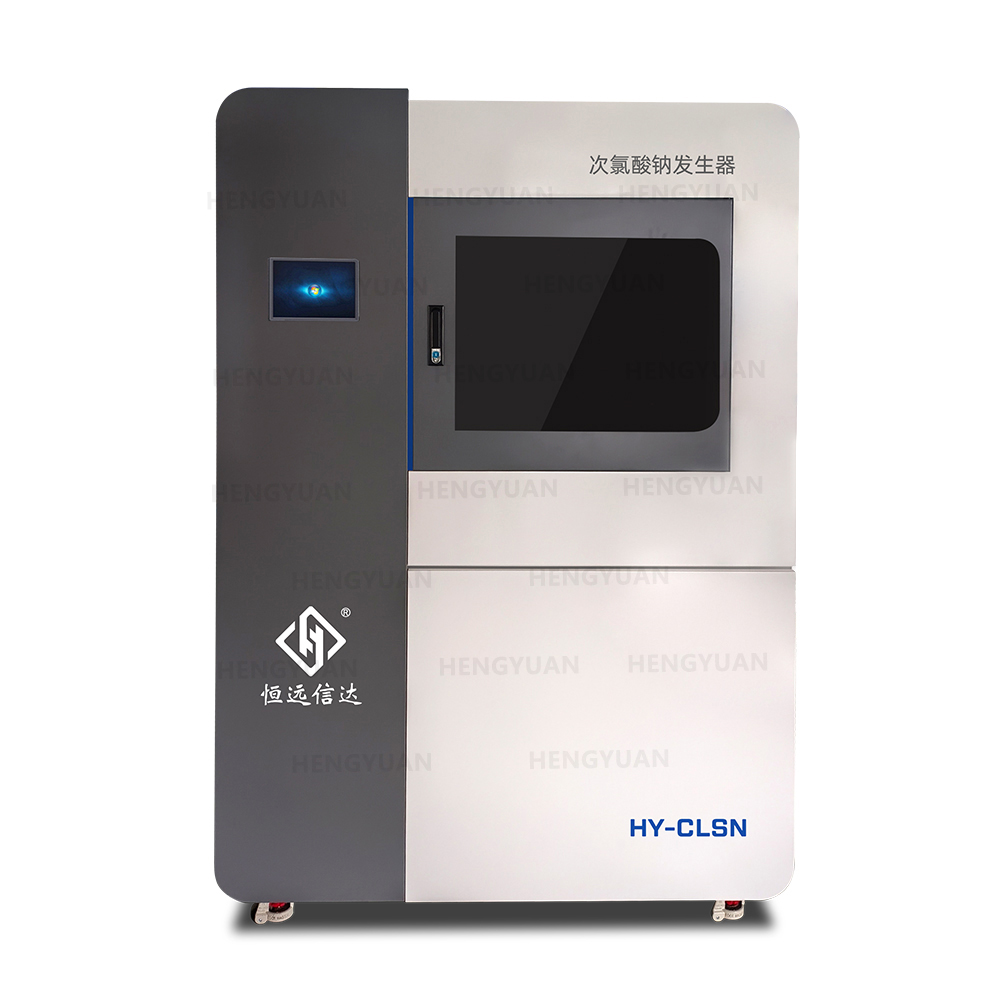
Evaluating Sodium Hypochlorite Generators: A Decision Framework
1. Defining the Disinfection Scope: Pool vs. Wastewater Demands
Selecting the correct system begins with distinguishing between the specific water chemistry profiles of your application. You must fully understand the unique environmental constraints before evaluating hardware specifications. Different water bodies present highly variable chemical challenges that dictate equipment architecture.
For swimming pool disinfection equipment, operators must focus heavily on precision control. Pools require lower, highly consistent chlorine residuals across varying bather loads. The primary goal is maintaining pristine water clarity. You must prevent chloramine buildup without irritating swimmers. Swimmers are highly sensitive to fluctuating chemical levels, requiring extremely tight dosing parameters. Reliability and aesthetics also drive purchasing decisions for commercial aquatic centers. Excessive mechanical noise or a massive equipment footprint will disrupt daily facility operations. Best practice involves installing systems offering micro-dosing capabilities for highly stable residuals.
Conversely, a wastewater disinfection system focuses strictly on high-capacity throughput and intense mechanical resilience. Wastewater environments handle significant daily fluctuations in organic loads. Facilities measure these severe loads via Biochemical Oxygen Demand (BOD) and Chemical Oxygen Demand (COD) metrics. Such harsh environments require robust, industrial-grade components. The generator must sustain continuous, heavy-duty cycles without faltering under pressure. Common mistake: Operators occasionally attempt to apply light-duty commercial units to municipal wastewater pipelines. These under-engineered units inevitably fail under heavy organic loading conditions.
You must apply a strict decision filter during the planning phase. Assess whether your facility requires a modular approach. Using multiple smaller generators provides excellent system redundancy. If one unit unexpectedly fails, the others carry the critical load. Alternatively, a single high-output system works efficiently for large centralized treatment facilities. Modular designs allow maintenance personnel to perform routine servicing while easily maintaining baseline regulatory compliance.
2. Generator Capacity Selection and Sizing Factors
Over-specifying a generation system leads to immense energy waste. It also creates stagnant hypochlorite solutions inside bulk storage tanks, degrading chemical efficacy. Under-specifying leads directly to regulatory failure, public health hazards, and completely unsafe water conditions.
Begin with a highly accurate peak load calculation. Do not size your equipment based on average daily loads. Calculate your exact dosage requirements based on peak seasonal usage. For wastewater settings, evaluate the maximum influent flow recorded during severe storm events. A generator sized merely for average days will fall dangerously behind during high-traffic hours or sudden influent spikes.
Next, analyze the system dwell time and necessary residuals. You must measure the physical piping distance between the dosing point and the final sampling point. Hypochlorite solutions degrade naturally over time and distance. The system capacity must accommodate necessary residual levels at the far end of the pipe network. You must thoroughly account for natural degradation rates of the freshly generated solution.
Evaluate the operational duty cycles closely. Consider the generator’s physical ability to cycle on and off safely. Continuous production works well for steady baselines. However, intelligent cycling handles variable daily loads much better. Ensure the system maintains the required effective chlorine concentration without constant human intervention. Operators should never need to adjust output dials manually every hour.
Follow these specific generator capacity selection steps for accurate sizing:
- Audit historical chemical usage data over a full calendar year.
- Identify the highest single-day demand periods during peak seasons.
- Apply an engineering safety factor, typically ranging from 20 to 30 percent.
- Analyze local regulatory guidelines regarding minimum mandatory chlorine residuals.
- Confirm existing site power configurations and water supply pressure can fully support maximum peak output.
3. Technical Evaluation: Efficiency, Electrodes, and Power
Not all generation systems yield the same chemical conversion efficiency. The electrochemical cell acts as the beating heart of your entire investment. It strictly dictates both immediate performance metrics and long-term hardware durability.
Electrode material quality remains a paramount technical concern. Look exclusively for advanced mixed metal oxide (MMO) coatings. Manufacturers must apply these coatings onto pure titanium substrates. These specific materials dictate the ultimate longevity of the cell. They provide massive physical resistance to electrical polarization. Cheap, inferior electrodes degrade rapidly, causing chemical conversion rates to plummet within months of installation.
Demand verified testing data regarding salt and power consumption. Ask vendors for exact salt usage measured in pounds per kilogram of chlorine produced. Review the exact kilowatt-hours required to generate one pound of active chlorine. High-efficiency systems drastically reduce the facility's chemical footprint. This superior efficiency keeps long-term operating costs highly manageable and predictable.
Brine quality requirements demand strict operational attention. Feed-water quality impacts everything occurring inside the electrolytic cell. Some systems remain hypersensitive to calcium and magnesium hardness levels. Hard water scales internal electrodes in a matter of days, restricting flow and electrical transfer. Evaluate whether your facility needs an integrated water softener. Alternatively, look for self-cleaning system designs. Automated acid-washing cycles mitigate scale buildup effectively and preserve costly cell lifespans.
Table 1: Efficiency Comparison by Electrode Type
| Electrode Base Material | Surface Coating | Expected Lifespan | Scaling Resistance | Relative Power Efficiency |
| Pure Titanium | Advanced MMO (Ruthenium/Iridium) | 7 - 10 Years | High | Excellent |
| Standard Titanium | Basic Ruthenium Oxide | 3 - 5 Years | Moderate | Good |
| Graphite / Carbon | Uncoated | 1 - 2 Years | Low | Poor |
4. Integration: Automation and Dosing Precision
Modern facilities rely heavily on deeply interconnected control systems. Your generator must act as a seamless, reliable component within a larger automatic disinfection equipment ecosystem. Standalone units create unnecessary manual labor and constantly invite human error into the treatment process.
Ensure strict PLC and SCADA system compatibility. The generator must provide standardized communication inputs and outputs out of the box. Standard protocols like 4-20mA and Modbus/TCP remain absolutely mandatory. They allow flawless digital integration with your existing building or plant management software. Plant operators desperately need remote visibility into generator status, alarms, and output metrics at all times.
Evaluate the mechanical precision of your sodium hypochlorite dosing mechanisms. Dynamic, real-time feedback loops are essential for modern regulatory compliance. Systems modulating production rates based on real-time ORP (Oxidation-Reduction Potential) yield vastly superior results. Direct chlorine sensor feedback prevents dangerous under-dosing or over-dosing events. These dynamic digital adjustments offer better chemical savings compared to rigid, fixed-rate pump systems.
Safety interlocks protect both facility staff and expensive equipment. Verify the system includes automated safety shutdowns for all critical faults. Look for dedicated sensors detecting low water flow, dangerously high temperatures, or explosive hydrogen gas accumulation. Hydrogen venting is a strict, non-negotiable safety requirement. Proper safety interlocks minimize operator liability and prevent catastrophic equipment damage during unexpected mechanical failures.
5. Managing Lifecycle Costs and Operational Risks
The lowest initial sticker price is rarely the most economical choice. You must aggressively factor in daily labor, preventative maintenance, and replacement parts over a standard ten-year horizon. Long-term financial sustainability requires looking far past the initial capital expenditure.
Analyze the consumables lifecycle carefully before committing to a vendor. Every electrolytic cell eventually degrades and requires full replacement. Ask vendors for the documented mean time between failures (MTBF) for these specific cells. Know the exact market cost of a replacement cell before signing any purchase order. Frequent, unexpected cell replacements will quickly destroy municipal or commercial operational budgets.
Maintenance complexity directly dictates ongoing facility labor expenses. Favor highly functional designs offering open-frame accessibility. Operators should reach critical internal components easily without dismantling the entire metal chassis. If a certified factory technician must travel on-site to handle routine electrode cleaning, your operational expenses will rise exponentially. Look for highly transparent, user-friendly maintenance protocols. Best practice involves training your existing on-site staff for basic acid washing procedures to reduce reliance on external contractors.
Vet the vendor’s local service and support network rigorously. A generator serves as critical, life-safety infrastructure. Local spare parts availability matters heavily during an emergency weekend outage. Advanced software dashboard features provide zero practical value if you cannot source a simple replacement pump seal within 24 hours. Reliable local service guarantees maximum uptime and continuous environmental compliance.
Conclusion
Selecting proper generation equipment moves far beyond merely reading a manufacturer's spec sheet. It requires a deep, uncompromising analysis of your daily operational realities and specific water chemistry. Prioritize the unique demands of your site, mapping out exact peak flow loads accurately before looking at hardware models. Evaluate electrochemical cell quality rigorously to ensure long-term efficiency and significantly reduced power consumption over the equipment's lifespan. Ensure seamless PLC integration for highly responsive, automated chemical delivery that eliminates manual operator guesswork. Moving forward, conduct a comprehensive water quality audit of your feed-water source. Measure your site's peak usage over a continuous 30-day period. Finally, request detailed MTBF documentation from at least three different vendors before making your final purchasing decision.
FAQ
Q: What is the main benefit of on-site sodium hypochlorite generation?
A: It entirely eliminates the logistical nightmares and severe safety risks associated with transporting, storing, and handling highly concentrated bulk chlorine bleach. On-site generation also stabilizes facility budgets by insulating operations from volatile global chemical pricing, providing a highly consistent supply of fresh chlorine precisely when needed.
Q: How often do I need to clean the electrolytic cells?
A: Maintenance frequency depends heavily on feed-water hardness levels and the specific generator design. Hard water requires much more frequent cleaning to remove restrictive scaling. Advanced, high-quality systems feature automatic acid-washing or polarity reversal technology, which significantly reduces manual labor and extends intervals between mandatory cleanings.
Q: Can a single generator handle multiple pools or wastewater lines?
A: Yes. A properly sized generator combined with a complex dosing manifold system can efficiently serve multiple treatment lines. However, this creates a risky single point of failure. Dual or modular generator setups are strongly recommended to provide essential operational redundancy and ensure continuous water treatment.
Q: What is the impact of salt quality on generator performance?
A: Poor salt quality introduces heavy impurities that cause premature electrode fouling and severe calcium scaling. This severely reduces chemical conversion efficiency and drastically shortens overall cell lifespan. Always adhere strictly to the manufacturer’s recommended salt purity specifications to maintain optimal system performance.
Q: Is "effective chlorine concentration" the same as the concentration of the bleach?
A: Not necessarily. Effective concentration strictly refers to the actual strength of the active solution exactly as it enters the water column. The generator must consistently produce this precise strength to meet strict disinfection targets, compensating perfectly for any natural degradation that occurs during tank storage or transit.
 English
 العربية
 Français
 Русский
 Español
 Português
 Deutsch
 italiano
 日本語
 한국어
 Nederlands
 Tiếng Việt
 ไทย
 Türkçe
 አማርኛ
 ພາສາລາວ
 Bahasa Melayu
 Filipino
 Bahasa Indonesia
 magyar
 Română
 Монгол
 қазақ
 Српски
 हिन्दी
 فارسی
 Kiswahili
 Slovenščina
 Svenska
 Ελληνικά
 Suomi
 Dansk
 Shqip
 বাংলা
 Oʻzbekcha
 Azərbaycan dili
 íslenska


